

How old is my fur coat? It’s one of the first questions many people ask when they discover a beautiful vintage fur coat.
Unlike a modern garment with a clearly printed production date, a vintage fur coat rarely comes with an exact year. Instead, its age can be estimated by examining a combination of details, including the fur, label, lining, silhouette, hardware, construction, and history of the garment.
Whether you’ve inherited an old mink coat, found a vintage fox jacket, discovered a Persian lamb coat at an estate sale, or are simply curious about a fur piece in your wardrobe, this guide will show you how to start identifying its approximate era.
Dating a vintage fur coat is usually an estimation rather than an exact science. Individual manufacturers, designers, regions, and alterations can make some garments difficult to date precisely.
How Can You Tell How Old a Fur Coat Is?
The most reliable way to date a fur coat is to look at several characteristics together.
The main things to examine are:
- The fur type and treatment
- The coat’s silhouette
- The label and manufacturer’s information
- The lining
- The closures and hardware
- The length and proportions
- The coat’s provenance or ownership history
One detail alone rarely tells the whole story. The strongest estimate comes from comparing several clues together.
1. Examine the Fur Type
Start with the most obvious feature: the fur itself.
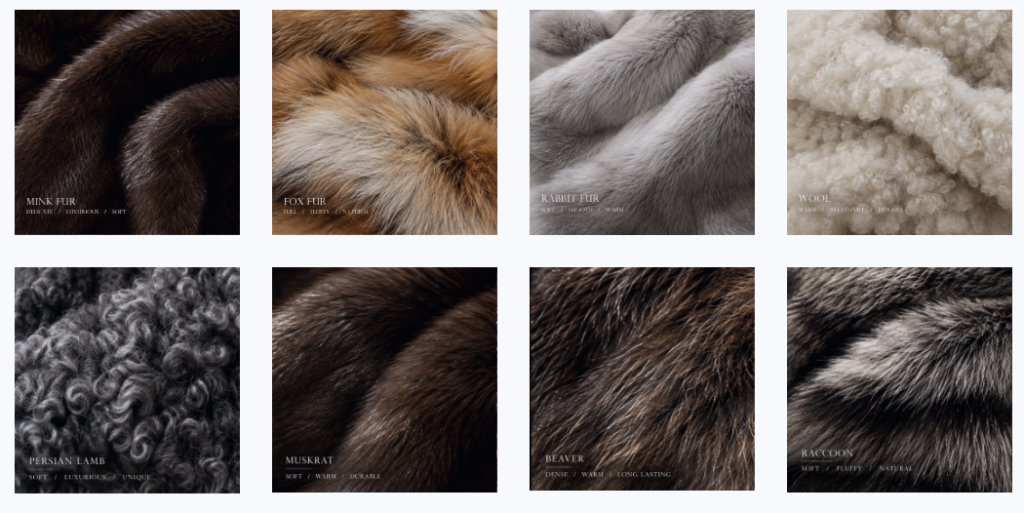
Vintage coats can be made from many different types of fur, including:
- Mink
- Fox
- Rabbit
- Shearling
- Persian lamb
- Muskrat
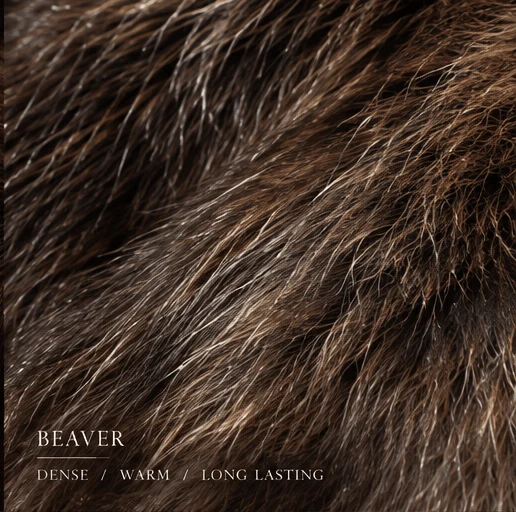
- Beaver
- Raccoon
Identifying the fur can help narrow down the possibilities, but fur type alone cannot determine the exact age of a coat.
Mink, for example, has been used for luxury outerwear for generations. A mink coat could come from several different decades.
Instead, examine how the fur was used. Look at the size of the pelts, the direction of the fur, how the pelts are joined, whether the fur is natural or dyed, and the overall pattern created by the pelts.
2. Look at the Silhouette of the Coat
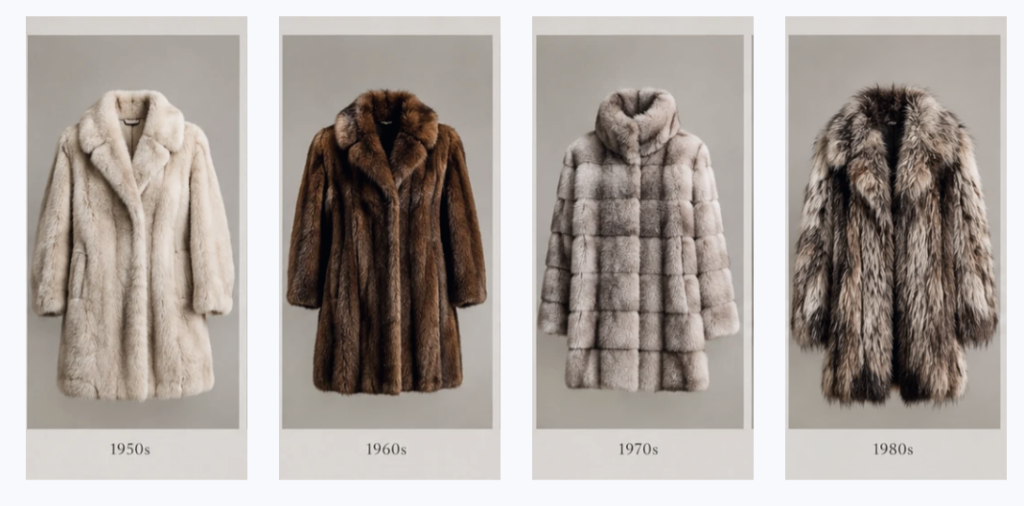
The shape of a vintage fur coat is one of the strongest visual clues to its era.
Fashion trends changed significantly throughout the 20th century, and fur coats often reflected those changes.
1940s and 1950s Fur Coats
Fur coats from the mid-century period often have a more formal appearance.
- Structured shoulders
- Defined waists
- Longer lengths
- Large collars
- Formal silhouettes
- Heavier construction
1960s Fur Coats
The silhouette began to change as fashion became more experimental.
- Shorter coats
- Boxier shapes
- Larger collars
- Straight silhouettes
- A-line shapes
- More relaxed proportions
1970s Fur Coats
The 1970s are particularly recognizable for dramatic proportions.
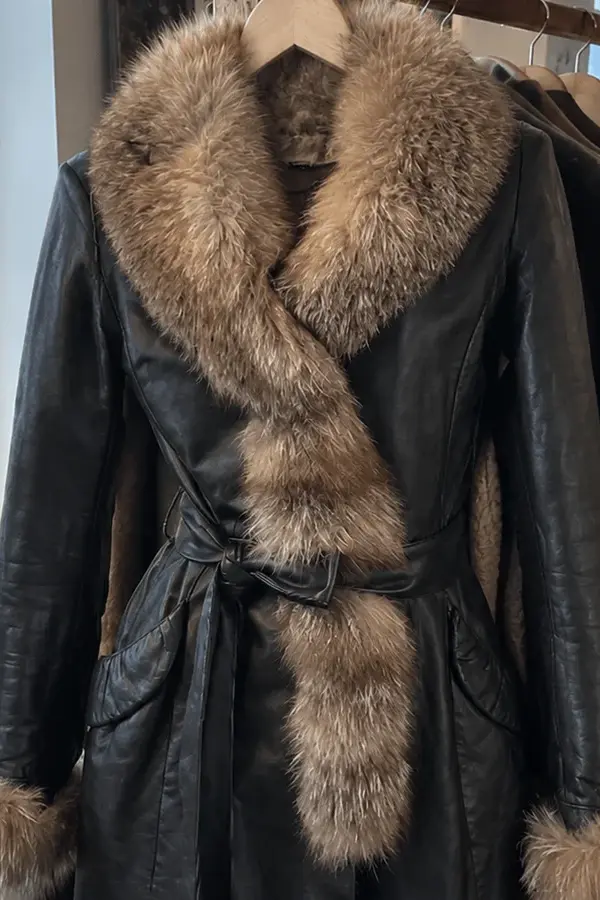
- Long fur coats
- Oversized collars
- Large lapels
- Flared silhouettes
- Relaxed shapes
- Shearling and suede combinations
- Strong textural details
1980s Fur Coats
The 1980s brought exaggerated fashion proportions.
- Strong shoulders
- Oversized silhouettes
- Large collars
- Dramatic proportions
- Shorter fur jackets
- Bold fashion styling
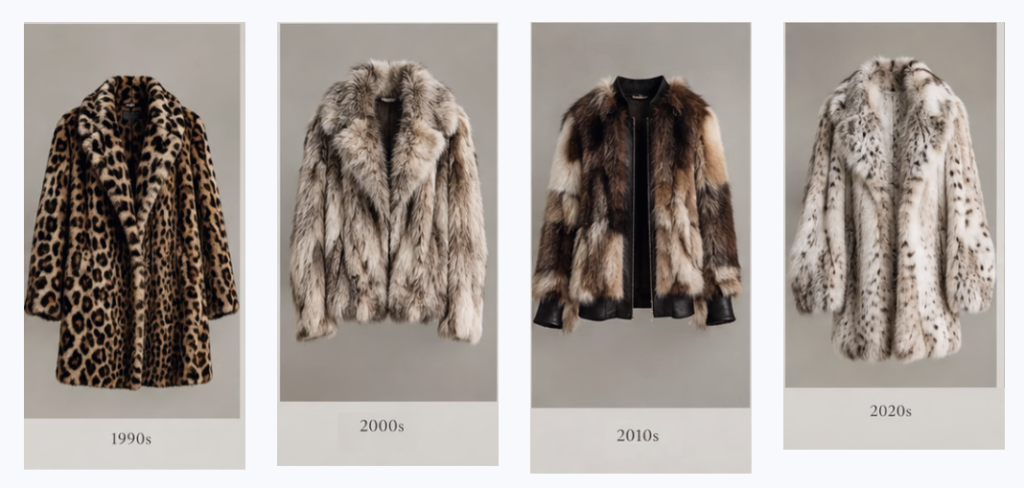
1990s Fur Coats
By the 1990s, many fashion silhouettes became cleaner and more streamlined.
- Straight silhouettes
- Less exaggerated shoulders
- Short fur jackets
- Minimal collars
- Simpler construction
- More understated proportions
2000s Fur Coats
Fur fashion in the 2000s became more closely connected with contemporary ready-to-wear and celebrity-driven fashion. Compared with many earlier vintage styles, coats from this period often featured more streamlined proportions and fashion-focused silhouettes.
Common characteristics may include:
- Short and cropped fur jackets
- Fitted silhouettes
- Three-quarter length coats
- Smaller or cleaner collars
- Fur-trimmed leather and suede
- More contemporary hardware
- Combination of fur with other modern materials
During this period, fur was increasingly used not only for traditional full-length coats but also for shorter jackets, collars, cuffs, trims, and fashion accessories.
2010s Fur Coats
Fur fashion in the 2010s included a wide range of styles, from traditional luxury coats to contemporary fashion pieces. Vintage-inspired silhouettes were also reinterpreted through modern cuts and construction.
Some characteristics you may encounter include:
- Minimal and streamlined silhouettes
- Short fur jackets
- Oversized contemporary coats
- Fur-trimmed outerwear
- Mixed-material construction
- Modern zippers and hardware
- Neutral and fashion-forward colors
Because many 2010s designs deliberately referenced earlier decades, appearance alone can make dating these pieces difficult. Labels, construction, hardware, and provenance can become especially useful.
2020s Fur Coats
Fur coats from the 2020s reflect a broad mix of vintage references, contemporary fashion, and changing attitudes toward materials and outerwear. Modern pieces can range from classic-inspired silhouettes to highly contemporary designs.
Common characteristics may include:
- Relaxed and oversized silhouettes
- Vintage-inspired designs
- Short and cropped jackets
- Minimalist construction
- Mixed-material outerwear
- Statement collars and textures
- Contemporary closures and hardware
A 2020s coat can intentionally look decades older, so styling alone is particularly unreliable for determining its production date. Original labels, manufacturing information, construction details, and purchase history can provide stronger evidence.
3. Check the Fur Coat Label
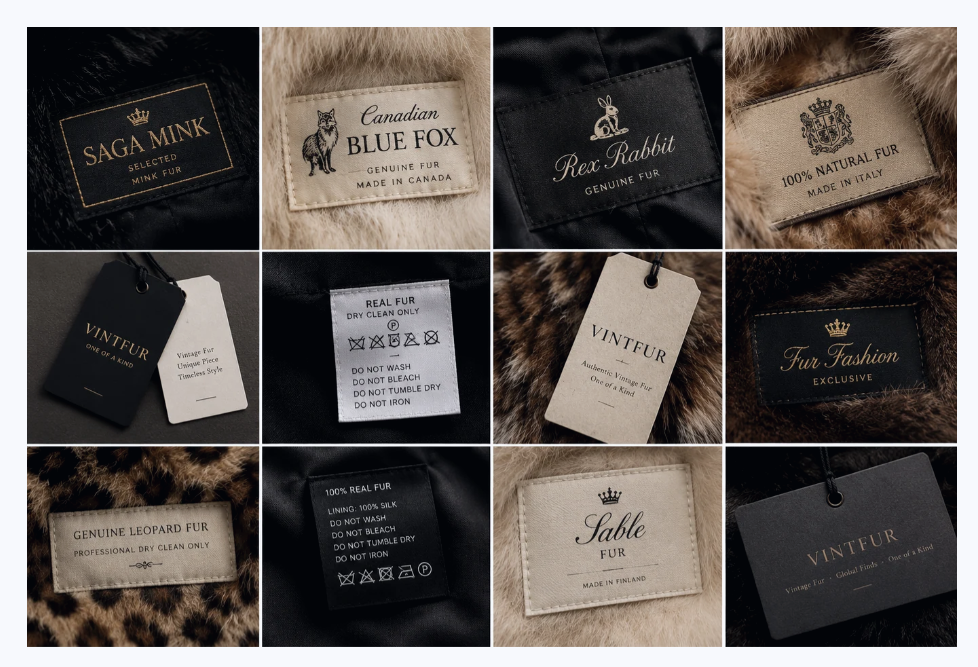
The label inside a fur coat can be one of the most valuable clues when trying to determine its age.
Look for:
- Manufacturer name
- Furrier name
- Brand name
- City or country
- Material information
- Size
- Style number
- Serial number
- Union or trade labels
Can a Fur Coat Label Tell You the Exact Year?
Usually, no. Labels can be replaced or altered over the life of a garment.
A coat may also have been relined, remodeled, resized, sold through another retailer, or given a replacement label.
Therefore, treat the label as evidence, rather than absolute proof.
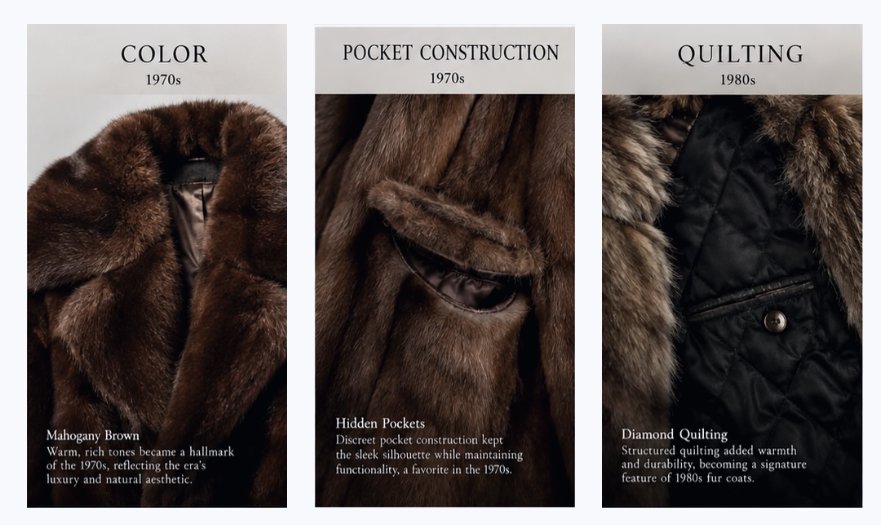
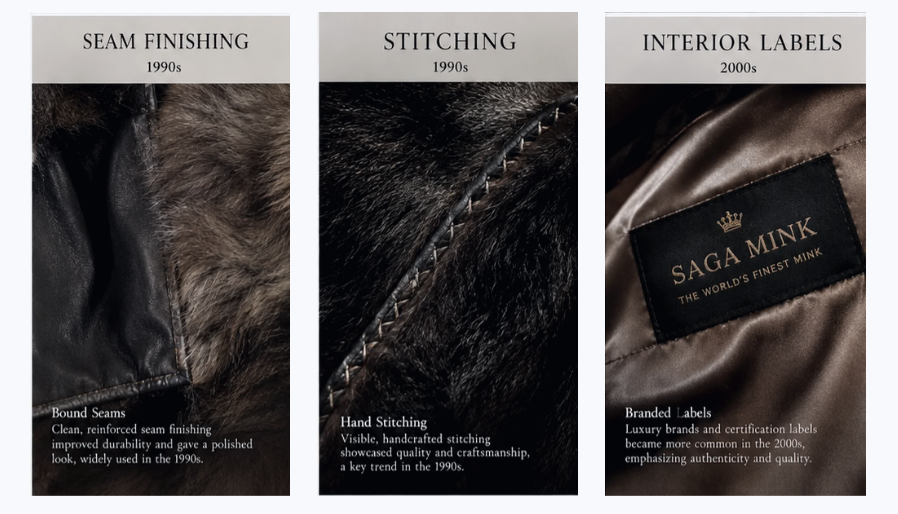
4. Inspect the Lining
The lining is another important clue when dating vintage fur.
Turn the coat inside out and examine the interior carefully.
- Fabric type
- Color
- Quilting
- Stitching
- Embroidery
- Interior labels
- Pocket construction
- Seam finishing
The Lining May Not Be Original
Vintage fur coats are often repaired or restored during their lifetime.
A coat may have had its original lining replaced because of wear, water damage, aging fabric, previous alterations, or professional furrier work.
If the exterior appears significantly older than the lining, the lining may be a later replacement.
5. Examine the Closures and Hardware
Small details can provide useful supporting evidence.
Check the:
- Fur hooks
- Eyes
- Snaps
- Buttons
- Zippers
- Buckles
- Decorative hardware
- Pocket closures
Traditional fur coats often use hook-and-eye closures rather than modern zipper systems. The style and construction of these components can help distinguish older construction from later fashion pieces.
6. Consider the Length and Proportions
Coat length can provide another clue when trying to date a vintage fur coat.
Full-Length Fur Coats
Long coats were particularly associated with formal and traditional fur fashion.
Three-Quarter Fur Coats
This versatile length appears across many decades, so it needs to be considered with other characteristics.
Short Fur Jackets
Shorter jackets became increasingly prominent as fur became integrated into more casual and fashion-focused wardrobes.
Cropped Fur Jackets
Cropped silhouettes have appeared repeatedly throughout fashion history and should not automatically be associated with one particular decade.
7. Consider the Color and Dye
Color can sometimes provide additional context when dating vintage fur.
Natural fur colors include:
- Brown
- Black
- Gray
- Cream
- Tan
Dyed fur can sometimes offer additional clues because certain fashion colors became more recognizable during particular periods.
However, color should never be used by itself to determine the age of a fur coat.
8. Research the Manufacturer
If your fur coat has a recognizable manufacturer or furrier label, research can become much easier.
Start by recording everything printed on the label:
- Brand or manufacturer
- Location
- Style number
- Material
- Size
Historical fashion archives, furrier directories, newspaper archives, museum collections, old advertisements, and vintage fashion catalogs can sometimes provide additional information.
Vintage Fur Dating: A Quick Reference
| Feature | What It Can Tell You |
|---|---|
| Fur type | Helps identify the garment and its market |
| Silhouette | Can suggest a fashion era |
| Label | May identify the manufacturer or furrier |
| Lining | Can reveal construction period or later restoration |
| Hardware | Provides supporting age clues |
| Pelting | Shows construction techniques |
| Length | Helps identify fashion proportions |
| Color | May reflect certain fashion trends |
| Alterations | Can explain conflicting age clues |
| Provenance | May provide valuable historical context |
No single category should be treated as definitive. The strongest identification comes from comparing multiple clues together.

Related posts
How to Tell How Old a Fur Coat Is: A Complete Vintage Fur Dating Guide

How old is my fur coat? It's one of the first questions many people ask when they discover a beautif...
Mob Wife Aesthetic: The Ultimate Vintage Fur Coat Guide for a Luxury Winter Look
The Mob Wife Aesthetic has become one of the most iconic fashion trends in recent years. Inspired by...